

What is Cubital Tunnel Syndrome?
Cubital tunnel syndrome is a condition caused by compression or irritation of the ulnar nerve as it passes through the cubital tunnel, a narrow space on the inside of the elbow. The ulnar nerve, often referred to as the “funny bone” nerve, supplies feeling and strength to parts of the hand and fingers. When this nerve is compressed, it can lead to numbness, tingling, and weakness in the hand and forearm. Causes include repetitive elbow bending, leaning on the elbow, previous fractures, or simply keeping the elbow bent for long periods (such as during sleep).
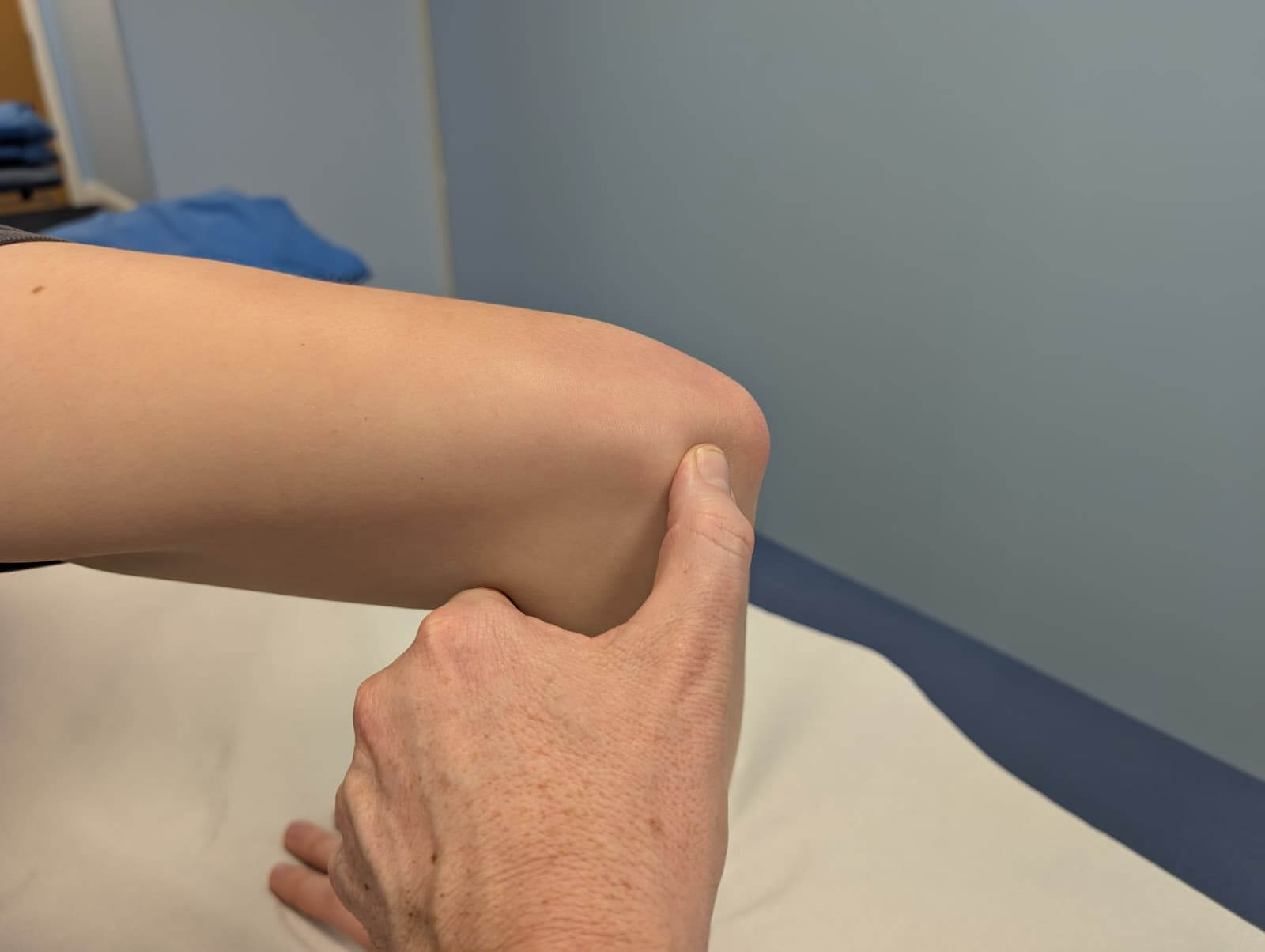
Typical Symptoms of Cubital Tunnel Syndrome
How Do We Treat Cubital Tunnel Syndrome at Our Clinic?
At Elite Physical Medicine, our skilled physiotherapists offer an individualised, evidence-based approach for managing cubital tunnel syndrome:
Comprehensive Assessment: We thoroughly assess your symptoms, daily activities, medical history, and may perform nerve tension tests to confirm diagnosis and rule out other causes of symptoms.
Education & Advice: You’ll get practical guidance on avoiding prolonged elbow flexion, minimising pressure on the inner elbow, and safe positioning techniques during work, rest, and sleep.
Exercise Programme: Nerve gliding and mobility exercises are prescribed to help the ulnar nerve move freely within the elbow tunnel and reduce irritation. Strengthening and stretching of the forearm muscles may also be included as appropriate.
Manual Therapy: Hands-on techniques such as gentle soft tissue massage and mobilisation may help to ease muscle tightness and discomfort around the elbow.
Splinting or Padding: We may advise the use of night splints or elbow pads to keep the elbow in a more neutral, extended position, particularly while sleeping or during activities that might irritate the nerve.
Pain Management: You’ll receive advice on simple pain relief, activity pacing, and self-care such as using cold packs if needed.
Additional Treatment Options for Cubital Tunnel Syndrome
Referral for Further Assessment: If significant symptoms persist despite conservative management, we may refer you for further investigations such as nerve conduction studies or an orthopaedic or neurology opinion. Surgical intervention to relieve pressure on the ulnar nerve is only considered in severe or longstanding cases where non-surgical management has not been effective.
Why Choose Us?
Our clinic focuses on accurate assessment, patient education, and a structured, evidence-based rehabilitation programme, supporting you towards symptom relief and regaining full hand and arm function. Throughout your recovery, our team provides ongoing support and tailored treatment to help you return confidently to work, hobbies, and everyday life.