

What is Rotator Cuff Tear?
A rotator cuff tear is an injury to one or more of the tendons and muscles that surround and stabilise the shoulder joint. The rotator cuff is made up of four muscles and their tendons, which help control lifting and rotational movements of the arm. Tears can be partial (where only part of the tendon is damaged) or full-thickness (where the tendon is completely torn). Rotator cuff tears can result from trauma, such as a fall or sudden force, or develop gradually due to wear and tear, especially in people over 40 or those who do repetitive overhead activities.
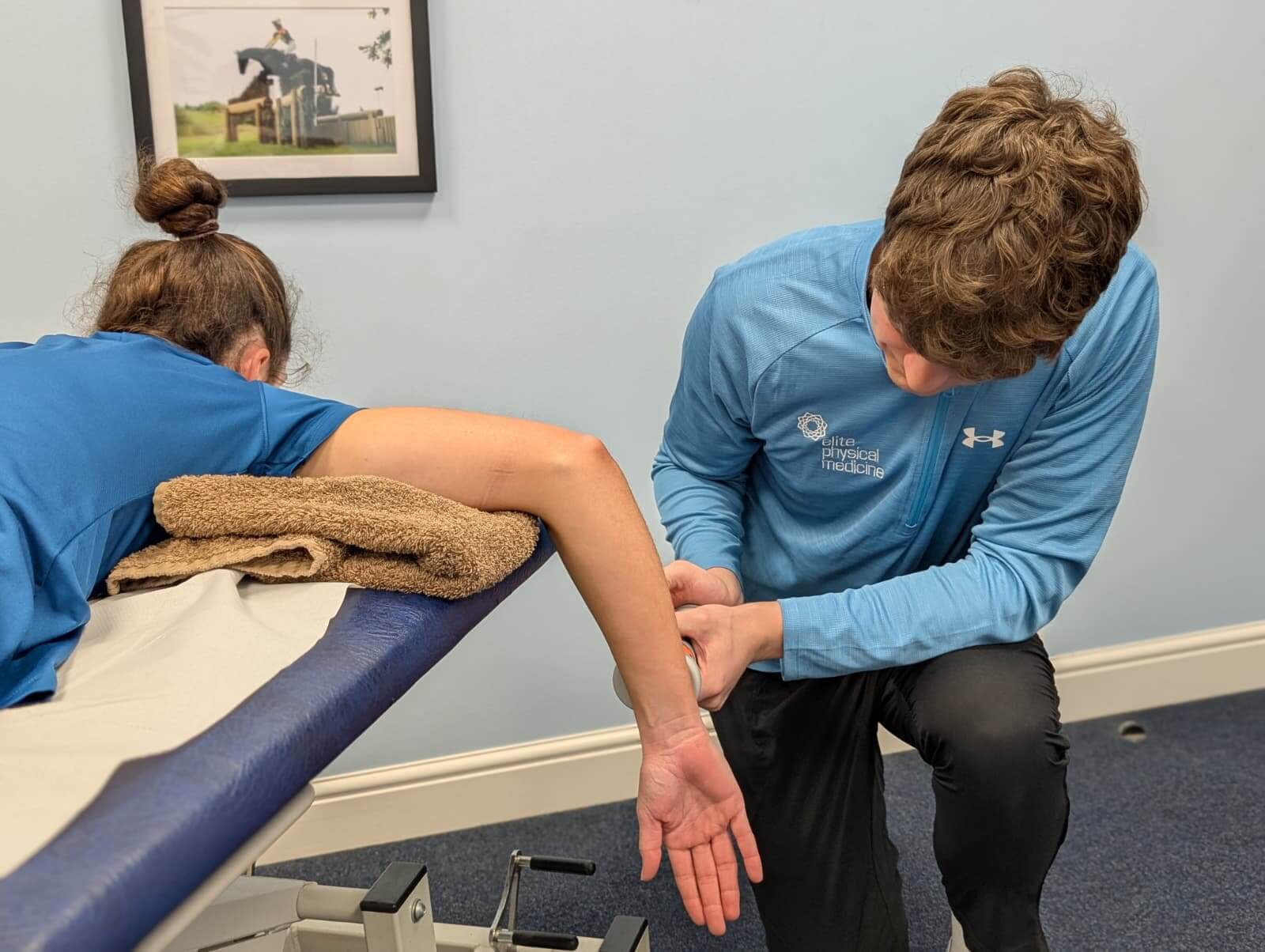
Typical Symptoms of Rotator Cuff Tear
How Do We Treat Rotator Cuff Tear at Our Clinic?
At Elite Physical Medicine, our physiotherapists provide an expert, individualised approach for managing rotator cuff tears:
Comprehensive Assessment: We perform a thorough examination to confirm the diagnosis, assess the extent of the tear, and understand your functional goals and activity demands. We offer on site diagnostic ultrasound to accurately assess the rotator cuff.
Education & Advice: You’ll receive clear guidance regarding the nature of your injury, expected recovery timelines, and how to adapt activities to protect your shoulder while it heals.
Exercise Programme: A tailored exercise regime is created to promote tendon healing, restore shoulder strength, and improve function. This includes gradual progression from gentle range-of-motion exercises to more advanced strengthening and functional movements as your condition improves.
Manual Therapy: Hands-on techniques such as soft tissue massage, mobilisation, and stretching may help relieve muscle tension, address postural factors, and optimise shoulder mechanics.
Pain Management: Practical advice is provided on using ice or heat, and over-the-counter pain relief as appropriate, to help control discomfort and enable participation in rehabilitation.
Activity Modification: Recommendations are made to help you adjust work, sport, and daily routines to minimise strain and support healing during recovery.
Additional Treatment Options for Rotator Cuff Tear
Referral for Further Investigation or Surgical Opinion: If symptoms are severe, persist despite comprehensive physiotherapy, or if there is significant weakness or loss of function, we may refer you for further imaging (such as MRI) or a surgical opinion. Surgery is sometimes recommended for large or complex tears, especially in active individuals or when conservative management is unsuccessful.
Why Choose Us?
Our approach combines evidence-based physiotherapy, diagnostic ultrasound, manual therapy, and a strong emphasis on personalised exercise to help you regain function, confidence, and independence. We work closely with you throughout your journey, providing ongoing support and expert guidance tailored to your needs and goals.