

What is Trigger Finger?
Trigger finger, medically known as stenosing tenosynovitis, is a condition that affects the tendons in your fingers or thumb, causing them to catch, lock, or “trigger” when you bend or straighten the affected digit. It is caused by irritation and thickening of the tendon sheath, which narrows the space through which the tendon moves, often leading to pain, stiffness, and sometimes a popping or clicking sensation. Trigger finger frequently arises after repetitive gripping tasks and is more common in people with diabetes or rheumatoid arthritis.
Typical Symptoms of Trigger Finger
How Do We Treat Trigger Finger at Our Clinic?
At Elite Physical Medicine, our physiotherapists offer a personalised, evidence-based approach for managing trigger finger:
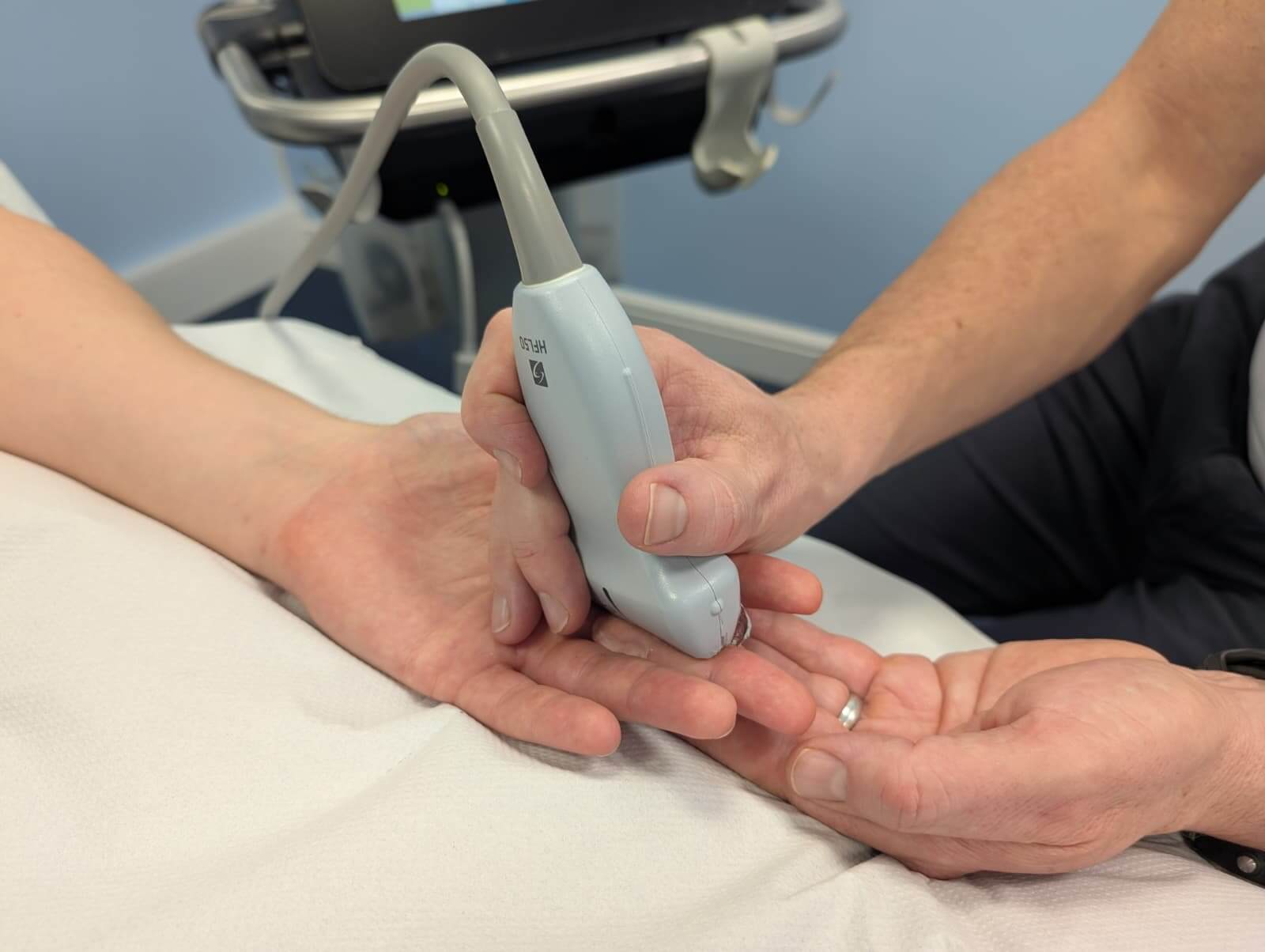
Comprehensive Assessment: We conduct a thorough assessment to confirm diagnosis, ultrasound investigation to rule out other hand conditions, and understand your daily activity needs.
Education & Advice: You’ll receive clear guidance on activity modification, ergonomic adjustments, and strategies to reduce hand strain during daily tasks.
Exercise Programme: Gentle stretching and mobilisation exercises may be introduced to help restore the flexibility and movement of the affected finger. In some cases, specific tendon gliding exercises are used to maintain finger mobility and reduce symptoms.
Manual Therapy: Hands-on soft tissue techniques and massage can help ease discomfort and reduce local swelling or irritation around the tendon.
Splinting: We may recommend a custom or prefabricated finger splint to keep the affected joint straight, particularly overnight, as this can reduce symptoms and prevent locking or triggering.
Pain Management: Advice is provided on using ice packs, rest, and over-the-counter pain relief, as appropriate, to support comfort and healing.
Additional Treatment Options for Trigger Finger
Referral for Further Intervention: If symptoms are persistent or severe and do not respond to conservative management, we can refer you for further specialist assessment. Possible interventions may include steroid injection (under specialist care) or, very rarely, minor surgical release—these are reserved for cases not improving with physiotherapy and splinting.
Why Choose Us?
Our clinic delivers evidence-based assessment, gentle rehabilitation, and supportive advice, helping you manage trigger finger and get back to daily activities pain-free. With personalised treatment and ongoing support, we are committed to restoring comfort and function in your hand.